Category

Category: main

main

Understanding Projection and How We Use It

We all have parts of ourselves that we’d rather not face – those uncomfortable truths, insecurities, and flaws that make us feel vulnerable. Often, the mind protects us from these painful realizations through a defense mechanism called projection.

Projection is attributing one’s own unacceptable feelings or impulses onto another person. Instead of admitting we harbor bitterness, jealousy, or other toxic traits, it’s much easier to see them in others and condemn those qualities in them. As the saying goes, we see in others what we can’t accept in ourselves.

Read the rest: Understanding Projection and How We Use It
main

“Don’t Take Anything Personally – Nothing Others Do Is Because of You”

Every day, we encounter a myriad of interactions – some pleasant, some not so much. In the midst of these interactions, it’s easy to internalize the actions and words of others, believing that they are a direct reflection of our worth or our being. However, one of the most liberating truths we can embrace is this: Don’t take anything personally. Nothing others do is because of you.

Read the rest: “Don’t Take Anything Personally – Nothing Others Do Is Because of You”
main

No One Can Read Your Mind

In the intricate dance of human relationships, whether with partners, friends, or family, there’s a common misstep many of us make: expecting others to read our minds. This silent expectation, though often stemming from a place of vulnerability, can lead to misunderstandings, unmet needs, and feelings of disconnect. Let’s delve into why it’s essential to remember that our loved ones aren’t mind-readers and the importance of direct communication.

Read the rest: No One Can Read Your Mind
main

The Transformative Power of Genuine Interest in Other People

polyamory

In today’s fast-paced world, genuine human connections are becoming increasingly rare. Yet, the timeless advice from Dale Carnegie’s “How to Win Friends and Influence People” remains as relevant as ever.

One of the core principles Carnegie emphasizes is the power of being genuinely interested in others. Here’s an in-depth exploration of this principle and how you can apply it in your daily life.

Read the rest: The Transformative Power of Genuine Interest in Other People
main

Love in the Age of AI

For the lonely and loveless, artificial intelligence is offering a new way to find companionship. A growing number of single people are turning to AI-powered apps and chatbots to fill the role of a romantic partner. While it may seem unusual to date a piece of software, some are finding the experience surprisingly fulfilling.

The rise of virtual lovers comes at a time when loneliness is pervasive. According to recent studies, over a third of Americans feel lonely on a regular basis. For those seeking an antidote to isolation, AI offers a low-stakes way to enjoy flirtatious banter and emotional intimacy.

Chatbots like Replika aallow people to explore relationships without the complexity of human dating. Users report feeling understood, cared for, and supported by their AI significant others. The technology can mirror expressions of adoration and provide constant companionship that some find lacking in their real lives.

Read the rest: Love in the Age of AI
main

15 Extremely Bizarre Mental Disorders

1. Alice in Wonderland Syndrome

Alice in Wonderland may be pure fantasy, but one of Alice’s more bizarre experiences shares its characteristics with a scary mental disorder. Known also as Todd Syndrome, Alice in Wonderland Syndrome causes one’s surroundings to appear distorted. Just as Alice grows too tall for the house, those suffering from Alice in Wonderland Syndrome will hear sounds either quieter or louder than they actually are, see objects larger or smaller than reality, and even lose sense of accurate velocity or textures. This terrifying disorder, which has been described as an LSD trip without the euphoria, even perverts one’s own body image. Fortunately, Alice in Wonderland Syndrome is extremely rare, and in most cases affects those in their 20s who have a brain tumor or history of drug use.

Read the rest: 15 Extremely Bizarre Mental Disorders
main

Math Problem of the Day

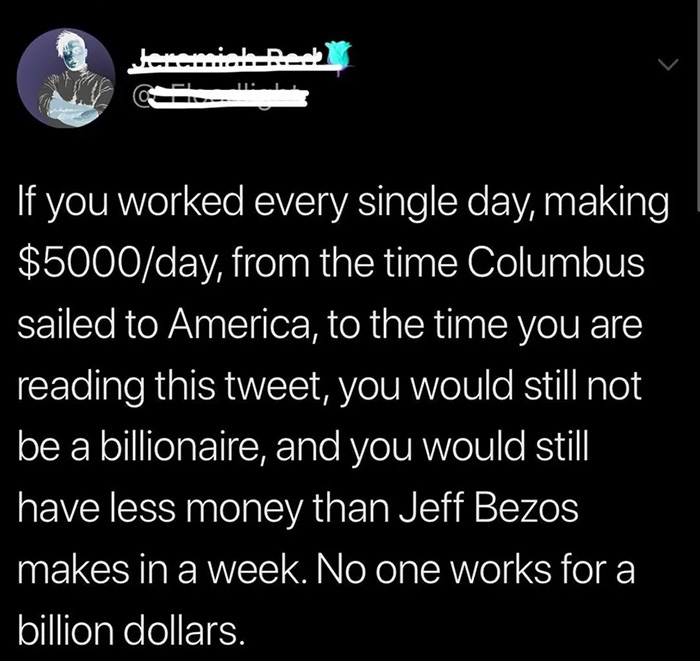
If you worked every single day and made $5000/day from the time Columbus sailed to America. How much money would you have if you put all of it in a savings account that returned 2% interest each year?

To answer this question, we need to break it down into a few steps:

  1. Calculate the number of days since Columbus sailed to America.

  2. Calculate the total amount earned without investing.

  3. Calculate the amount if invested in an index fund.

  4. Number of Days Since Columbus Sailed to America: Columbus sailed to America in 1492. Let’s assume today’s date is September 27, 2023.

Read the rest: Math Problem of the Day