Tag

Tag: history

Answers

What Were Aztec Sacrifices Ritual Actually Like?

They were religious events first. The Aztecs believed that their gods got their sustenance from human sacrifice; and one of the basic duties of Religion is caring for your gods. The most important of these sacrifices were carried out during the 18 monthly festivals of the Solar Year.

One of these, to give you an example, was the Tlacaxipehualiztli, the Festival of the Flaying of Men, celebrated at spring equinox before the rainy season, one of the most brutal and complex.

Read the rest: What Were Aztec Sacrifices Ritual Actually Like?
Answers

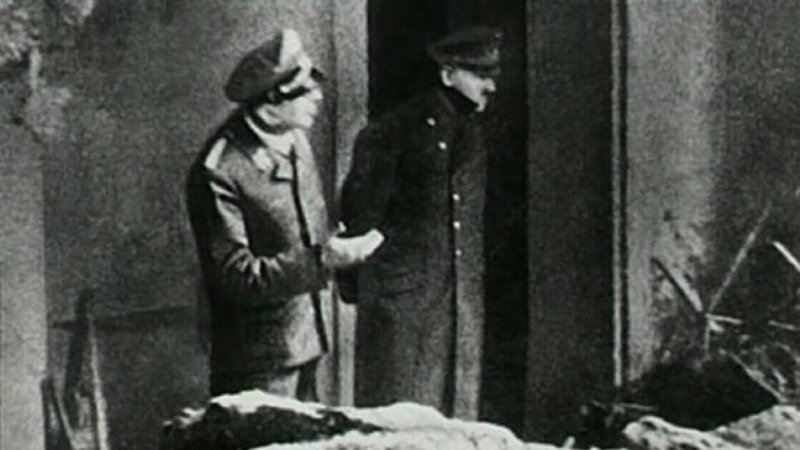
What was Hitler’s last day on Earth like?

In late April 1945, chaos reigned in Berlin. Years of war had turned former superpower Germany into a battleground, and its cities from strongholds into places under siege. The Red Army had completely circled the city, which now called on elderly men, police, and even children to defend it. But though a battle raged on in the streets, the war was already lost. Adolf Hitler’s time was almost up.

Read the rest: What was Hitler’s last day on Earth like?
Picture Of The Day

Picture of the Day

Charles the II of Spain

This is the result of 200 years of inbreeding, Charles the II of Spain, at age 4 he could barely walk and was still breastfeeding. At age 9 he couldn’t read or write, he died at age 38 and his death led to the War of the Spanish Succession killing between 400k and 700k people.

“The king is rather short, skinny, but not badly formed, only ugly in the face; he has a long neck, a long face, a long chin and as if it bent upwards; the lower lip typical of the Habsburgs; not very large eyes, turquoise blue and a fine and delicate complexion.

He has a look with melancholy on his face and a little astonished. His hair is blond and long, and it is combed back so that the ears are exposed.

He cannot straighten, unless he leans against a wall, a table or something else.

His body is as weak as his mind. From time to time he shows signs of intelligence, memory and a certain liveliness, but not now; he usually looks slow and indifferent, appearing dumbfounded.

You can do whatever you want with him, since he lacks of own will”

Answers

Did Some Southerners Immigrate to Brazil after the Civil War?

Meet the Confederados

Defeated in the Civil War, some Southerners refused to live in a land without slavery. They also hated the idea of being part of the Union, so they left the United States.

Where did they go? Some 10,000 – 20,000 packed up and headed further south to Brazil, where they would be known as the Confederados. Some returned during the reconstruction, but most stayed and built new lives in their new country.

Read the rest: Did Some Southerners Immigrate to Brazil after the Civil War?
Picture Of The Day

Picture of the Day

Irena Sendler

This is Irena Sendler, a Polish social worker and nurse who smuggled approximately 2,500 Jewish children out of Nazi-occupied Warsaw.

She entered the ghetto using a special work pass and would smuggle out children in the bottom of her toolbox and also utilize her burlap sack for larger kids. She also used ambulances and sewers to get them out of the ghetto.

Read the rest: Picture of the Day
Picture Of The Day

Picture of the Day

japanese internment poster

This was a poster put up in San Francisco, calling for the forcible removal of Japanese Americans in 1942. The instructions are clear:

“All Japanese persons, both alien and non-alien, will be evacuated from the above designated area by 12:00 o’clock noon Tuesday, April 7, 1942.

No Japanese person will be permitted to enter or leave the above described area after 8:00 a.m., Thursday, April 2, 1942, without obtaining special permission from the Provost Marshal at the Civil Control Station located at:

Read the rest: Picture of the Day
Picture Of The Day

Picture of the Day

Texas Track Club in 1964

Texas Track Club in 1964

During the spring of 1964, Sports Illustrated covers featured the usual cadre of super (or soon to be super) stars: golfer Jack Nicklaus, lefty pitcher Sandy Koufax, the first-time national champion UCLA basketball team.

Then, on April 20, with hair blown out, makeup on, and crouched in sprint positions, Janis Rinehart (foreground), Paula Walter (middle), and Jeanne Ellison (now Jeanne Ellison Biggs, right) became the first female track athletes from the U.S. to grace the cover. Their look was no joke.

Read the rest: Picture of the Day
Picture Of The Day

Picture of the Day

cotton mill workers

Portrait of cotton mill workers in Georgia, 1909

Families usually began mill work together, since employers paid adults poor wages and offered jobs to children to help make ends meet. “In this way, mills attracted a core of mature workers at low cost along with younger, even cheaper, laborers who could perform simple tasks and move in and out of the mills in response to market fluctuations.” Critics opposed child labor and mill owners were often of a divided mind on the subject, but children remained an integral part of the labor force. Between 1880 and 1910, about one-fourth of all cotton mill workers in the South were below the age of sixteen.

Read the rest: Picture of the Day
Picture Of The Day

Picture Of The Day

george stinney jr

In 1944 a black teenager named George Stinney Jr was accused of murdering two white girls on flimsy evidence, he was tried without legal representation with an all-white jury, and he was executed by electric chair at the age of 14.

He was accused of killing two white girls in a rural part of a South Carolina mill town. He actually participated in the town’s search party for the girls, but he made the fatal mistake of telling people that he had seen the girls on the day they died. One day later, he was arrested and his family was forced to leave the town. His father was fired from his job at the mill, and his siblings were told that they would be lynched if they didn’t leave immediately. The court refused to hear his appeal, and the appeals on his behalf to the governor for clemency were denied. He is the youngest American to be sentenced to death and executed.

Executioners noted that he was too small for the electric chair when he died; the straps did not fit him, an electrode was too big for his leg, and the boy had to sit on a bible to fit properly in the chair.