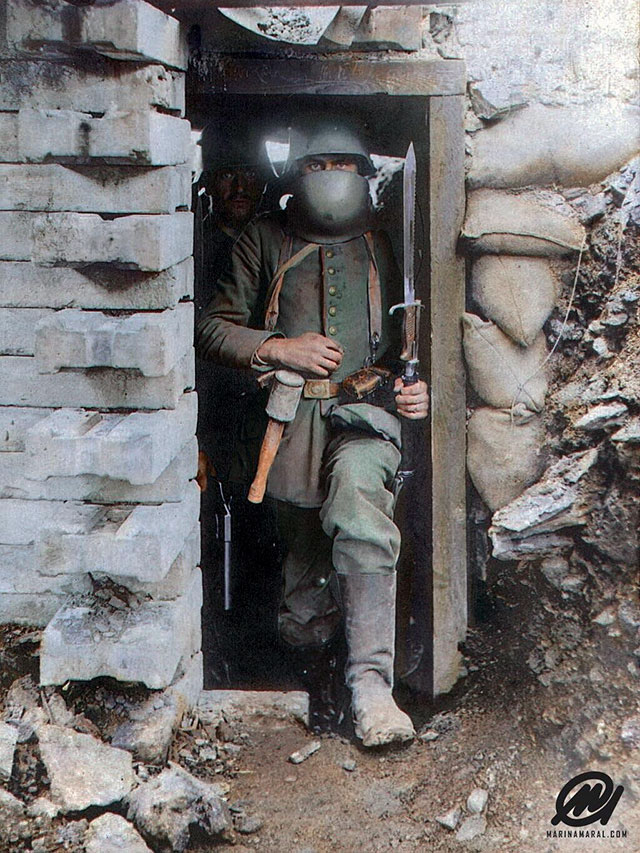
World War 1 Trench Raider
During World War I, trench raiding emerged as a tactic in trench warfare. It involved small-scale surprise attacks on enemy positions under the cover of night.
Typically, raiding parties consisted of small teams of soldiers who would darken their faces with burnt cork before navigating through the barbed wire and debris of no man’s land to infiltrate enemy trench systems. The distance between friendly and enemy front lines varied, but was generally several hundred meters. Daylight raids were futile as enemy machine gunners and snipers had clear visibility of no man’s land and could easily target anyone revealing themselves above the trench parapet.
The standard procedure was to slowly approach the sentries guarding a small sector of the enemy front line trench, carefully searching for signs of activity such as cigarette glows or hushed conversations in the dark, and silently eliminate them. Once the trench was secured, the raiders would swiftly complete their mission objectives within minutes to minimize the risk of enemy reinforcements arriving. Grenades were often used to target enemy troops sleeping in dugouts before the raiders would make their escape back to their own lines, mindful of the increased danger of staying in the enemy trench for too long.