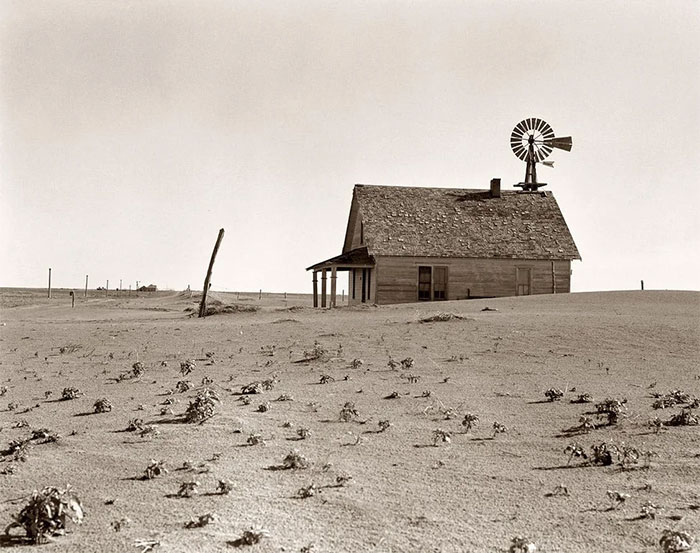
Dust Bowl Farm. Coldwater District north of Dalhart, Texas. This house is occupied; most of the houses here have been abandoned. 1938
The Dust Bowl was both a manmade and natural disaster. Beginning with World War I, American wheat harvests flowed like gold as demand boomed. Lured by record wheat prices and promises by land developers that “rain follows the plow,” farmers powered by new gasoline tractors over-plowed and over-grazed the southern Plains. Between 1925 and 1930 more than 5 million acres (2 million hectares) of previously un-farmed land was plowed.
However, overproduction of wheat, coupled with the Great Depression, led to severely reduced market prices. The wheat market was flooded, and people were too poor to buy. Farmers were unable to earn back their production costs and expanded their fields in an effort to turn a profit. They covered the prairie with wheat in place of the natural drought-resistant grasses and left any unused fields bare.
But plow-based farming in this region cultivated an unexpected yield: The loss of fertile topsoil that literally blew away in the winds, leaving the land vulnerable to drought and inhospitable for growing crops. In a brutal twist of fate, the rains stopped. By 1932, 14 dust storms, known as black blizzards were reported, and in just one year, the number increased to nearly 40.
Millions of people fled the region. The government enacted aid programs to help, but it wasn’t until 1939 when the rain returned that relief came.